Solution
High-Rate Data Recording
Sustained capture from optical and network sources onto SSD arrays, with ordinary file access at the other end.
Recording is where high-rate systems usually fail: the converter keeps up, the link keeps up, and then the disk subsystem drops samples under sustained load. Peak numbers are easy; the number that matters is what the system holds for the length of the run.
Our recorders are specified on sustained rate - 1 GB/s in the compact module, 5 GB/s in the 6U VPX module - and each optical lane can be recorded to its own file. Files come back over FTP or SMB, so the analysis side needs no special software.
Signal chain
Where our hardware sits
Highlighted stages are the ones we supply.
- 01 Data source sensor, radar, imager
- 02 Optical or network link Aurora, SRIO, UDP
- 03 Recorder SSD array
- 04 Analysis host FTP / SMB / API
Where to start
Products for this application
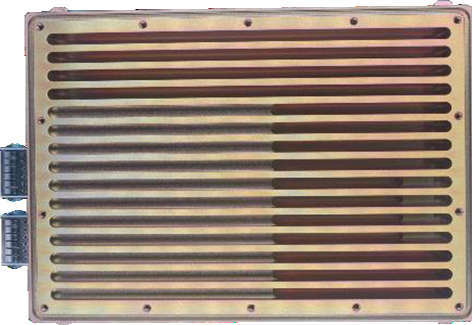
Portable deployments: 1 GB/s onto 8 TB, two QSFP+ ports, 30 W, in a 160 x 115 mm enclosure.
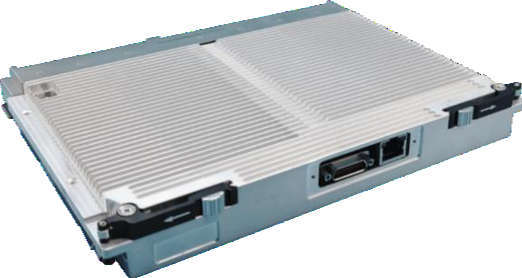
The high end: 5 GB/s onto 32 TB in a single 6U slot, twelve GTH lanes in.
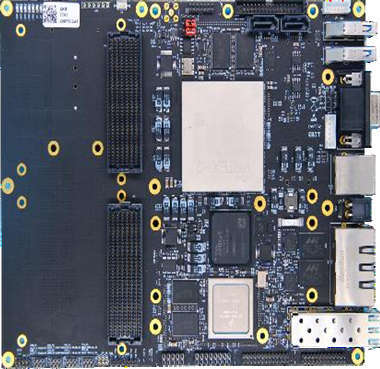
When the source is the network rather than optical: streams capture straight out over 10 GbE.
Before you specify
Questions worth settling early
- Is 1 GB/s the peak or the sustained figure?
- Sustained, read and write, for the length of the run. Peak rates are not how we specify recorders because they are not what causes a dropped run.
- How do we get the data off?
- Standard network file systems - FTP or SMB - or PCIe Gen2 x4 file offload at up to 700 MB/s on the VPX module. A full-function API ships with source examples for Windows and Linux.
- Can each channel be its own file?
- Yes. Each optical lane forms an independent file, which keeps the analysis side simple when the lanes are unrelated sensors.
Send the bandwidth, channel count and run length. Typical response within one business day.